Blurry Vision at School: How to Know If Your Child Needs a Myopia Check
A child rarely walks into the kitchen and says, “I think I’m becoming nearsighted.” More often, the clues arrive indirectly. A teacher mentions that your daughter is leaning forward during math. Your son starts sitting closer to the television. Homework takes longer because copying from the board is slow. A child who once loved reading road signs from the back seat suddenly stops noticing them.
Myopia, commonly called nearsightedness, is one of the most common reasons school-age children struggle to see clearly at a distance. A child with myopia can usually see nearby work, such as books, tablets, and worksheets, but distant objects look blurred. In a classroom, that often means the whiteboard, smartboard, projector screen, wall clock, posters, or a teacher’s demonstration across the room may be hard to see.
The challenge for parents is that children adapt. They guess. They ask a friend what the board says. They memorize where things are. They move closer without realizing why. Some assume everyone sees the same way they do, especially if the blur developed gradually. That is why recognizing the signs of myopia matters, particularly during the school years when visual demands increase quickly.
Why classroom vision problems are easy to miss
School puts a child’s eyes through constant distance changes. A typical student may look from a workbook to a board, back to a laptop, then across the room to a teacher. Good vision at near and far distances helps this process feel automatic. When distance vision is blurry, the child has to work harder than classmates just to gather the same information.
Blurry classroom vision does not always look dramatic. A child may still earn good grades, especially if they are bright, motivated, or sitting near the front. They may compensate by listening carefully or copying from a neighbor. In younger grades, where letters on the board may be large and teachers move around the room, myopia can remain hidden for months. By middle school, when print on screens, slides, and lab instructions becomes smaller, the problem often becomes more obvious.
Parents also tend to watch for complaints of eye pain or headaches, but myopia may not cause either. Many children with nearsightedness simply see poorly at distance without discomfort. If the blur is mild, they may only notice it in specific situations, such as reading the scoreboard at a game, recognizing faces down the hallway, or seeing the board from the back of the classroom.
Another reason myopia slips by is that children often do not have a reliable comparison. If your child’s distance vision has been slowly changing over a year, the blur may feel normal to them. I have heard many children say after their first pair of glasses, “I didn’t know trees had separate leaves,” or “I can see the teacher’s face now.” Those comments are memorable because they show how long a child may function with less vision than adults realize.
What myopia is, in plain language
Myopia happens when light entering the eye focuses in front of the retina instead of directly on it. The retina is the light-sensitive tissue at the back of the eye. When focus falls short of the retina, close objects may remain clear, but distant objects become blurred.
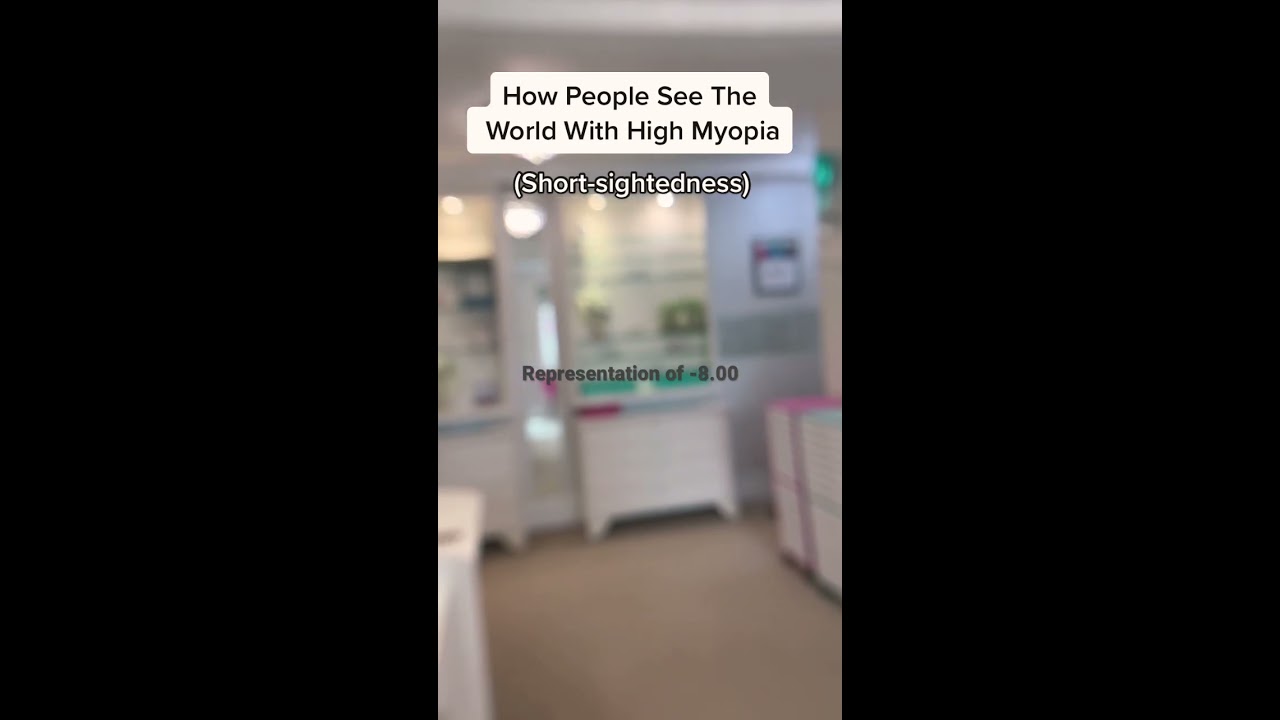
In many children, this occurs because the eye grows longer from front to back. That growth can continue through childhood and adolescence, which is why a child’s prescription may change repeatedly during school years. Myopia often begins between the ages of about 6 and 14, though it can start earlier or later. Genetics matter, but they are not the whole story. Children with one or both parents who are nearsighted have a higher risk, yet many children develop myopia even without a strong family history.
Modern visual habits also play a role. Long stretches of near work, limited outdoor time, and heavy use of screens are often discussed in relation to myopia. The relationship is complex, and not every child who reads or uses a tablet will become nearsighted. Still, a child’s daily routine can influence eye comfort and may be relevant when an eye care professional evaluates risk.
The most important point for parents is practical: myopia is measurable, correctable, and worth identifying early. Glasses or contact lenses can help your child see clearly. In some cases, an optometrist or ophthalmologist may also discuss myopia management options intended to slow progression, depending on the child’s age, prescription, eye health, and risk factors.
The school-related signs parents and teachers often notice first
One of the classic signs is a child squinting distance objects into focus. Squinting narrows the eyelid opening and can temporarily sharpen vision by reducing scattered light. A child may squint at the board, during a movie, while watching sports, or when trying to identify someone across a playground. Some children squint so often that parents mistake it for a facial habit rather than a vision clue.
Another common sign is moving closer. A child may choose the front row when they used to sit anywhere, inch toward the television, hold a tablet unusually close, or stand near displays in stores. In the classroom, they may lean forward, tilt their head, or repeatedly ask to move seats. These adjustments can be subtle. A teacher may notice before a parent does because the problem shows up most clearly when a child needs to see across a room.
Copying from the board can become slow or inaccurate. A child may leave out words, copy numbers incorrectly, or ask classmates what was written. They may seem inattentive when the real issue is that the instruction is visually unavailable. For example, a student who cannot read the agenda on the board may appear disorganized. A student who misses details on a math example may make errors that look like carelessness.
Behavior can change too. Some children become frustrated or avoid activities that demand distance vision. They may lose interest in sports because the ball is harder to track. They may avoid looking up in class because they cannot read what everyone else seems to see. Others become unusually tired after school, not because myopia strains the eyes in the same way as some focusing disorders, but because the day requires constant compensating.
Parents should also pay attention to complaints that sound vague. “The board looks fuzzy,” “I can’t see from the back,” “The words move,” or “My eyes are tired” can all be worth investigating. Children may not use the word blurry. They may say the teacher writes too small, the projector is bad, or the classroom lights are weird. Sometimes they are right, but if the complaint repeats in different settings, vision should be checked.
A short checklist of possible myopia clues
Use this as a practical screen, not a diagnosis. A child best optometrist near me can have myopia with only one or two of these signs, and some children show none until an exam.
- Squinting to see the board, television, road signs, scoreboards, or faces at a distance
- Sitting very close to screens or asking to move nearer to the front of the classroom
- Complaining that distant words or images look blurry, fuzzy, doubled, or hard to make out
- Copying boardwork slowly, making visual copying mistakes, or asking classmates for help seeing
- Avoiding distance-based activities, such as ball sports, assemblies, or presentations
If several items sound familiar, it is reasonable to schedule eye exam appointments rather than waiting for the next school screening.
Why school vision screenings are helpful but not enough
Many children first get flagged through a school vision screening, and these programs can be valuable. A simple distance chart may catch a child who is clearly struggling to see letters across the room. Screenings can identify children who need further testing, especially in communities where routine eye care is less accessible.
A screening, however, is not the same as a comprehensive eye exam. It may not evaluate focusing, eye teaming, eye health, depth perception, or the exact prescription needed. It may also miss mild or early myopia, especially if the child guesses well, memorizes letters, or has one eye doing most of the work. Some screenings are performed under less-than-ideal conditions, such as busy hallways, variable lighting, or limited time.
A child can also pass a screening and still have meaningful classroom vision symptoms. This happens when the chart distance, letter size, or testing method does not match the child’s real school demands. Reading large letters in a quiet screening area is not the same as reading pale marker on a glossy board from the side of a classroom while the teacher is talking.
For that reason, parent and teacher observations still matter. If a child repeatedly complains about blurry classroom vision, squints at distance, or struggles with boardwork, a passed school screening should not end the conversation. It should simply be one piece of information.
When to schedule an eye exam
Parents often ask how long they should watch symptoms before booking an appointment. The safest answer is that persistent distance blur deserves an eye exam. If the symptom appears once during a movie or after a long day, it may not be urgent. If it happens repeatedly over days or weeks, or if a teacher has noticed changes in class, it is time to schedule eye exam time with an eye care professional.
You do not need to wait for grades to drop. In fact, waiting for academic problems can delay care unnecessarily. Many children with myopia remain strong students, but they work harder than they should. Clear vision is not a reward for struggling long enough. It is a basic tool for learning.
Some situations call for more prompt attention. If your child suddenly develops blurred vision, eye pain, double vision, a new eye turn, flashes of light, a curtain or shadow in vision, or vision loss in one eye, seek urgent medical eye care. These symptoms are not typical of simple school-age myopia and should be evaluated quickly.
For routine concerns, an optometrist or ophthalmologist can perform a comprehensive exam. The visit usually includes visual acuity testing, refraction to optometrist determine whether a prescription is needed, assessment of eye alignment and focusing, and an eye health evaluation. Depending on the child’s age and findings, dilation drops may be used to get a better view inside the eyes and to measure the prescription more accurately. Dilation can make near vision blurry and light sensitivity noticeable for a few hours, so it helps to plan accordingly.
What happens during a myopia check
A good pediatric or family eye exam is not just a quick “Which is better, one or two?” test. With children, the clinician has to interpret responses, watch behavior, and sometimes measure the eyes in ways that do not rely entirely on the child’s answers.
The exam often begins with history. The doctor or technician may ask when symptoms started, whether the child sits close to screens, whether headaches occur, whether teachers have raised concerns, and whether parents or siblings wear glasses. Family history helps estimate risk, but the child’s day-to-day visual behavior is just as useful.
Visual acuity testing measures how clearly each eye sees at distance and often at near. This can reveal whether one eye is worse than the other, which matters because children can unknowingly rely on the clearer eye. Refraction then estimates the lens power needed to focus light properly. In children, especially younger ones, the focusing system can overwork during testing, so eye drops may be used to relax focusing and produce a more reliable measurement.
The eye health portion checks the front and back of the eye. Most children with myopia have healthy eyes, but it is still important not to assume blur is only refractive. The exam also gives the clinician a baseline for future comparison. If myopia progresses, knowing the starting point helps guide decisions.
Parents sometimes worry that their child might “fail” the exam or give inconsistent answers. That is normal. Experienced clinicians know how to cross-check. Objective instruments can estimate prescription, and child-friendly testing methods can confirm it. The goal is not to pressure the child into perfect responses. The goal is to understand how the eyes are functioning and what support will help.
If your child needs glasses
When a child receives a first myopia prescription, parents often ask whether glasses are needed all the time. The answer depends on the prescription strength, symptoms, age, and daily activities. A mild prescription may be recommended mainly for classroom distance viewing, movies, or sports. A stronger prescription is more likely to be worn full time because distance blur affects nearly everything beyond arm’s length.
Children usually adapt quickly to correctly prescribed glasses. The first few days may feel strange because the world appears sharper, distances may seem slightly different, and the frames are physically new. A child who has been functioning with blur may also feel surprised by details they had not been seeing. That adjustment is expected.
Frame fit matters more than many parents realize. Glasses that slide down the nose change the viewing angle and frustrate children. Frames that pinch behind the ears end up in backpacks. For active children, durable hinges, proper bridge fit, and lenses made from impact-resistant materials are worth discussing. For sports, regular glasses may not provide adequate eye protection, so prescription sports eyewear may be recommended.
It is also worth talking with the teacher after glasses are prescribed. A brief note can help ensure the child wears them when needed, especially in younger grades. Some children feel self-conscious at first. A calm, matter-of-fact approach from adults helps. Glasses should be treated like any other learning support, not as a major identity change.
Myopia can progress, so follow-up matters
Childhood myopia often changes over time. Some children progress slowly, while others need stronger prescriptions every year or even more often during growth spurts. Progression is one reason regular follow-up matters after the first diagnosis.
Eye care professionals may recommend yearly exams for many children, but a child with progressing myopia may need to be seen more frequently. The schedule depends on age, prescription level, rate of change, and whether any myopia management treatment is being used. Parents should ask what amount of prescription change would be considered typical and when to return if symptoms reappear.
Progression is not just about thicker glasses. Higher levels of myopia are associated with increased risk of certain eye conditions later in life, including retinal problems, glaucoma, and myopic macular changes. The absolute risk varies, and most nearsighted children do not develop serious complications. Still, reducing unnecessary progression when possible is a reasonable goal.
Myopia management has become a larger part of pediatric eye care. Options may include specially designed contact lenses, orthokeratology lenses worn overnight, low-dose atropine eye drops, or specific spectacle lens designs, depending on availability and clinical suitability. Each option has benefits, limitations, costs, and responsibilities. For example, contact lens-based approaches require careful hygiene and maturity. Atropine may cause light sensitivity or near blur in some children, depending on dose. Not every child needs these treatments, but children with early onset, rapid progression, or strong family history may be candidates for discussion.
The role of outdoor time and near work
Parents sometimes feel blamed when their child develops myopia, especially if the child enjoys reading or uses screens for school. That blame is misplaced. Myopia is influenced by multiple factors, including genetics and eye growth patterns that no parent fully controls.
That said, daily habits can support healthy visual development and comfort. Research has consistently linked more outdoor time with lower risk of developing myopia in children, though it may not stop progression once myopia is established. Many eye care professionals encourage children to spend time outdoors most days when weather, safety, and schedules allow. Outdoor light exposure and looking at varied distances may both play roles.
Near work deserves a balanced view. Reading is valuable. Homework is necessary. Digital learning is now part of many classrooms. The goal is not to make children afraid of books or screens, but to build breaks into long near tasks. A child who spends hours looking at near material without pause may experience eye fatigue, dryness, or headaches, even if myopia is not the only issue.
A practical rhythm is to have children look up and across the room or out a window periodically during near work. The often-cited 20-20-20 idea, looking about 20 feet away for 20 seconds every 20 minutes, is easy to remember, though families do not need to follow it with stopwatch precision. What matters is interrupting prolonged near focus and encouraging a mix of visual distances during the day.
How to talk with your child and the teacher
A teacher’s observation can be the key that uncovers a vision problem. If you suspect myopia, ask specific questions rather than simply asking whether your child seems fine. Teachers can often tell you where the child sits, whether they copy accurately from the board, whether they ask peers for help, and whether attention changes during visual tasks.
Children also respond better to concrete questions. “Can you see the board?” may get a quick yes, especially if the child wants to avoid fuss. More useful questions sound like real situations: “When you sit in your usual seat, can you read the date on the board?” or “Do the words get clearer if you squint?” or “Can you see the score during gym?” These questions help a child compare specific experiences.
Try not to frame glasses as a punishment or a sign that something is wrong with the child. A professional tone at home helps. You might say, “Your eyes may need help focusing far away. We’re going to check so school is easier.” That explanation is accurate and reassuring.
Questions worth asking at the eye appointment
A short set of prepared questions can make the visit more useful, especially if your child is nervous or the appointment moves quickly.
- Is my child nearsighted, farsighted, astigmatic, or is another issue affecting vision?
- Should the glasses be worn full time, only for distance, or for specific school activities?
- How much change would be concerning over the next year?
- Are myopia management options appropriate for this child?
- When should we schedule the next exam?
Bring any notes from the teacher if you have them. If your child has an individualized education plan, learning concerns, headaches, concussion history, developmental conditions, or medications that may affect vision or focusing, mention those as well. Eye care is better when the clinician has the whole picture.
When blurry vision is not myopia
Although myopia is common, not every child with school vision complaints is nearsighted. Astigmatism can blur vision at both distance and near. Hyperopia, or farsightedness, may cause near strain and headaches, though children can sometimes compensate for it. Eye teaming problems can make reading uncomfortable or cause intermittent double vision. Dry eye or allergy can cause fluctuating blur. Less commonly, medical eye conditions can affect clarity.
There are also non-vision reasons a child may struggle to copy from the board or avoid schoolwork. Attention difficulties, language processing issues, dyslexia, anxiety, and classroom seating can all play a role. A comprehensive eye exam does not answer every learning question, but it can remove one major uncertainty. If vision is normal, that information is still valuable because it helps parents and teachers look in the right direction.
Sometimes more than one issue exists. A child may have mild myopia and also trouble with attention. Glasses may improve board vision but not solve every school challenge. That does not mean the glasses failed. It means the child’s learning environment deserves a broader look.
The cost of waiting
It is tempting to postpone an eye exam when life is busy and the symptoms seem mild. Children are resilient, and parents often hope a complaint will pass. Sometimes it does. But persistent distance blur usually does not improve on its own if myopia is the cause.
The cost of waiting is often practical rather than dramatic. A child may spend months missing board details, feeling less confident, or working harder than peers. They may decide they are “bad at math” when they simply could not see the steps. They may avoid a sport because tracking the ball feels difficult. They may become quiet in class to hide the fact that they cannot read what is posted.
Early care can be straightforward. An exam identifies whether a prescription is needed. Glasses improve access to classroom information. Follow-up tracks changes. If progression risk is significant, parents can discuss additional options before myopia becomes more advanced.
A clear next step for parents
If your child is squinting at distance, sitting closer than usual, complaining about blurry classroom vision, or having trouble copying from the board, arrange a comprehensive eye exam. Do the same if a teacher raises concerns, even if your child has not complained. Children often normalize blur until someone asks the right question.
Bring examples to the appointment. Mention that your child cannot read the board from the third row, squints during movies, or confuses numbers on the classroom screen. Specific details help the clinician understand the real-world problem, not just the chart result.
Good vision does not guarantee an easy school year, but uncorrected distance blur can make school harder than it needs to be. A myopia check is a practical, low-risk step that can give your child clearer access to lessons, activities, and the everyday details of the world beyond arm’s length.
Phone:
(657) 445-2160
Website:
opticoreyegroup.com/brea-ca.html
Opticore Optometry Group, PC - BREA, CA
2500 E Imperial Hwy, Ste 196,
Brea,
CA
92821